The Best Golf Trip
You Never Considered
If you were asked to identify the single most compelling opportunity for golf to find a new global audience, we would put Hokkaido forward as the first, best answer. Here is the case.
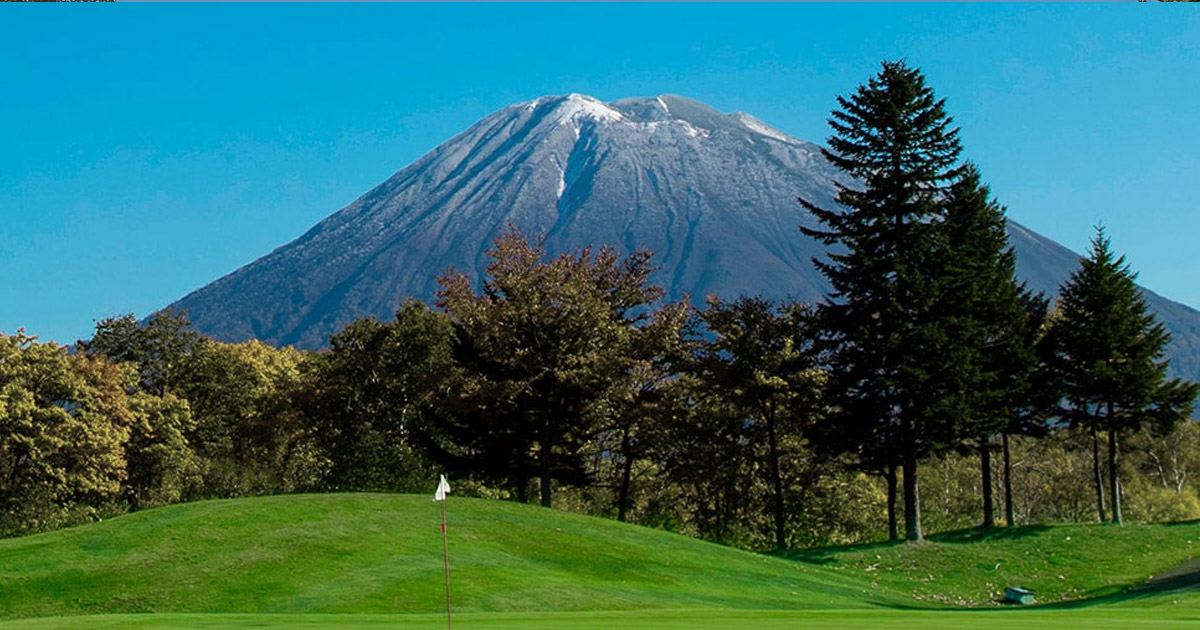
We spend a lot of time asking where golf has the most room to grow, which formats will attract new audiences, and which destinations are genuinely undervalued by the global golf conversation. Our answer is consistent: Hokkaido. Not Japan broadly. The island sits at a rare convergence of world-class courses, accessible culture, and international demand that has been building for three years without a format designed to capture it. During July and August there is arguably nowhere in Asia with better playing conditions: temperatures in the low 20s Celsius, lower humidity than virtually anywhere else in the region, and mountain air that makes a 7am tee time feel like a privilege. The case is not speculative. It is measurable.
A Different Kind of Golf Culture
Golf on Japan's main island has long carried a certain formality: private clubs, enforced lunch breaks at the turn, language barriers, green fees that could run to several hundred dollars on a modest course. Hokkaido has always been different. The island's cooler climate, wider fairways, and genuine openness to visitors created a golfing culture that feels less like a gatekeeping institution and more like a sport worth enjoying.
"Golf in Hokkaido is a little more relaxed than it is in Honshu. At most courses, guests have the option of playing 9 or 18 holes, lunch is not enforced at the turn like it is down south, and from my experience, green fees are more reasonable."
Your JapanA Century of Build-out
How Hokkaido Compares
Japan built 2,460 golf courses at the national peak in 2002. By FY2024 that number had declined for fifteen consecutive years to 2,154 operating courses, with players down 2.4% year on year. Hokkaido is the exception: the only area in Japan to record positive per-course player growth in FY2024, at plus 0.4%, while the national average declined 1.8%.
Korea shows what the other end looks like: 47 million annual players across just 578 eighteen-hole-equivalent courses, producing roughly 82,000 players per course per year. Hokkaido's 3.1 million rounds in 2024 translate to 129 players per operating day per course. During its season, Hokkaido concentrates premium demand into a compressed window rather than spreading it thin across twelve months.
The Green Season Opportunity
Hokkaido built its reputation on winter. In the 2024/25 ski season, visitors to Kutchan, Niseko, and Rankoshi reached 2.2 million, surpassing the pre-pandemic record, with foreign visitors at 67% of the total. The green season tells a different story. Kutchan Tourism Association data shows May through October draws around 200,000 total visitors and 65,000 foreign visitors, against 690,000 total and 570,000 foreign in winter. The foreign visitor ratio is 34% in summer versus 83% in winter. That gap is the opportunity.
Operators are moving on it. Tokyu Land has committed more than ¥10 billion in their Value up NISEKO 2030 program, explicitly targeting an all-season international resort. H2 Life was already packaging multi-course summer golf itineraries across Niseko Village, Hanazono, Hokkaido Classic, and Rusutsu in 2025, positioning golf as the luxury anchor of a green season stay. The honest operator assessment: summer ROI has not yet matched winter because accommodation supply remains ample. That is not a ceiling. It is a runway.
Winter made Hokkaido's reputation. The green season is where the next decade of growth will be written, and golf is the format best positioned to lead it.
Who Is Coming
Japan recorded 42.7 million foreign visitors in 2025, a national record. Hokkaido captured 12.8 million foreign guest-nights that year, up 24%, itself a record. The nationality mix matters as much as the volume: every top-five source market for Hokkaido has an established golf culture. North America accounted for 9% of Niseko winter visitors in 2024/25, and the US golfer who already knows Hokkaido for skiing may be the most underexploited audience in the market.
| Market | Visitors | Golf relevance |
|---|---|---|
| South Korea | 467,000 | Largest market. Established outbound golf culture. 82,000 rounds per course at home. |
| Taiwan | 312,200 | Second market. Strong golf participation culture. Growing premium travel appetite. |
| China | 125,500 | Third market. Golf participation growing fastest among outbound luxury travelers. |
| Hong Kong | 62,800 | Fourth market. High golf participation per capita. Premium spend per visitor. |
| United States | 50,400 | Fifth market. Highest per-visitor spend potential. Established appetite for premium golf travel. |
The Value Equation
US skiers already know this arbitrage: flying business class to Hokkaido, skiing Niseko for two weeks, costs less than the same trip to Aspen or Vail. Lift passes at a US premium resort run $300 to $400 per day; Niseko's daily ticket is roughly $70. Golf has the same story, and in some respects it is even more dramatic.
Five comparable rounds at Pebble Beach, Torrey Pines, or Bandon: $2,500 to $3,500 minimum, before caddie gratuities.
| Course | Green fee (USD) | Notes |
|---|---|---|
| Hokkaido Resort Golf | ||
| Hanazono Golf, Niseko | $64 to $115 | Peak visitor rate, 2025. No mandatory caddie. Low tipping culture. |
| Niseko Village Golf Course | $56 to $117 | Peak visitor rate, 2025. Arnold Palmer design. Cart or walking. |
| Rusutsu Resort Golf 72 | $72 to $87 | 2026 peak rate, self-play with cart included. Curtis Strange design, 72 holes. |
| Hokkaido Classic | $278 to $373 | Includes caddie, taxes. Requires member accompaniment. |
| US Trophy Golf Destinations | ||
| Pebble Beach Golf Links | $675 to $885+ | Green fee $675 resort guest. Cart $60. Caddie $150 to $210 per bag plus gratuity. |
| Bandon Dunes (peak) | $500 to $600+ | Green fee $375 to $475. Caddie $125 per bag plus $65 to $80 gratuity. |
| TPC Scottsdale Stadium | $379 to $550 | Dynamic pricing. Caddie $130 per bag plus $50 gratuity per player. |
| US West Coast Public Golf (for context) | ||
| Rancho Park, Los Angeles | $42 to $58 | City of LA public course. Cart $18 per seat. |
| West Seattle Golf Course | $47 to $54 | Dynamic pricing. Power cart $42 additional. |
| Torrey Pines (non-resident) | $163 to $322 | South Course peaks at $322 weekends. Cart $48 additional. |
Japan's caddie culture adds almost nothing to the cost: roughly $25 per person for a shared caddie, with no tipping expectation. Bandon's caddie fee alone runs $125 per bag plus $65 to $80 recommended gratuity. A full day at Bandon comfortably exceeds $600. The more counterintuitive comparison: a round at Hanazono or Rusutsu Resort Golf 72, championship resort setting with Mt. Yotei behind the 18th green, costs roughly the same as a Sunday round at Rancho Park in Los Angeles once cart fees are included.
The yen has averaged around ¥150 to the dollar across 2024 and 2025. A two-year structural window the golf world has been slower to notice than the ski world. It will not stay open indefinitely.
What the Market Has Proved
The two 2026 announcements, Rusutsu Resort Golf 72's new season across four championship courses and Niseko Village's inaugural Tanuki Golf Invitational at ¥150,000 to ¥200,000 per player, are operators responding to demand that is already present. The inbound visitor base is building. The green season investment is accelerating. The value for US, Korean, and Taiwanese golf travelers is exceptional and demonstrably so.
Hokkaido is at the very beginning of its international golf chapter. The courses are world-class. The value is unmatched. The summer climate, mild while the rest of Asia swelters, is a genuine competitive advantage that barely registers in the global golf conversation yet. What the market needs now is not more infrastructure. It needs amplification: a format that builds a global audience and turns a world-class golf destination into a world-class golf story.
Hokkaido is at the very beginning of its international golf chapter. What it needs now is not more infrastructure but amplification: a format that builds a global audience and turns a world-class golf destination into a world-class golf story.